Cruise shopping shouldn’t feel like filing taxes. Yet people routinely spend nights clicking between cruise line sites, forums, PDFs, and sketchy “limited time” banners… and end up booking the same sailing they could’ve found in 15 minutes.
Here’s the cleaner way: use a couple of solid aggregators to get the whole market in one view, decide your non-negotiables early, then compare total trip cost (fare + fees + tips + drinks + internet + excursions) instead of getting hypnotized by a low headline rate.
One line to keep you honest:
You’re not buying a cruise. You’re buying a bundle of constraints.
Your non-negotiables (the three filters that do 80% of the work)
Pick these before you even open a browser tab or start comparing comprehensive cruise holiday offers:
Budget (hard ceiling): the max you’ll pay all-in, not “before taxes/fees/gratuities.”
Duration: 3, 5 nights behaves like a long weekend; 7+ nights becomes a lifestyle.
Region: Caribbean isn’t Mediterranean isn’t Alaska, and switching regions changes flights, weather risk, sea days, and excursion costs.
Now, this won’t apply to everyone, but… if you can’t state those three in one sentence, you’re going to get dragged around by algorithms and shiny perks.
A practical template I’ve used with clients:
– “Under $3,000 for two people including daily gratuities”
– “7 nights”
– “Eastern Med, sailing from Barcelona or Rome”
Tight constraints are a gift. They cut noise.
Hot take: inclusions are where deals go to die
The “deal” you saw is often just a cheap base fare attached to expensive living.
Here’s the thing: cruise lines know exactly which costs people mentally ignore. Drinks. Wi‑Fi. Specialty dining. Gratuities. Port fees. Shore days. Transfers. That’s where profit hides.
So decide what you actually care about. Not what sounds luxurious on a marketing tile.
The inclusions that usually matter (and the ones that… don’t)
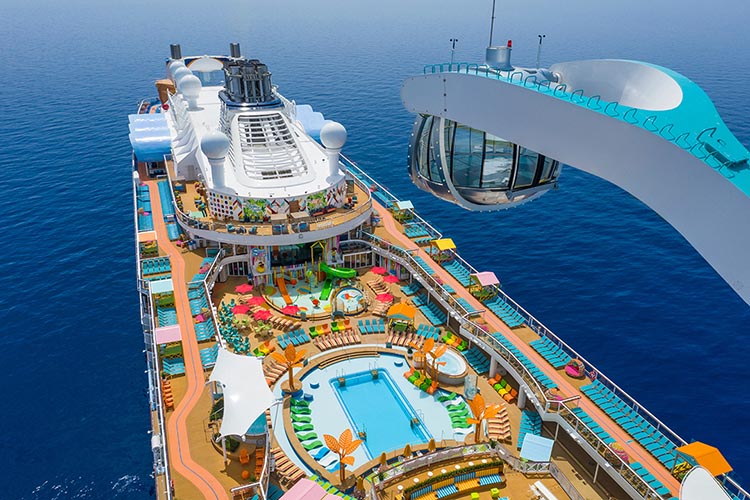
I’ll be opinionated: most travelers should focus on inclusions that reduce friction.
High-impact inclusions:
– Gratuities included (or at least clearly stated per-person-per-day)
– Drinks if you’ll reliably use them (2, 3 cocktails a day adds up fast)
– Wi‑Fi if you need more than messaging (some plans are basically “email and prayer”)
– 1, 2 specialty dining credits on longer sailings (breaks up routine)
Low-impact inclusions for many people:
– Random “shipboard credit” that can’t be used where you want
– Inflated “free upgrades” that just move you from one awkward cabin to another
– Excursion bundles that only include the least interesting tours (I’ve seen this more than I’d like)
And yes, sometimes a midship balcony beats a bargain suite. Motion and noise are real.
Aggregators: pick a few, not twelve
You want breadth, clarity on fare rules, and filters that don’t feel like they were built in 2009.
The best approach I’ve seen work is a two-layer search:
1) Aggregator to compare lines, ships, dates, cabin categories
2) Cruise line site to confirm what’s actually included and what the policies say in plain language
A small stat to justify price alerts and trend-watching: pricing is dynamic, and travel bookings broadly swing with demand signals. Google has reported that flight prices, for example, often shift noticeably as dates approach due to demand and inventory changes (Google Flights / Google Travel insights). Cruises behave similarly, just with different inventory mechanics.
Don’t treat that as a promise of “prices drop later.” Treat it as permission to track instead of guessing.
Compare itineraries like a spreadsheet nerd (because it works)
When you line itineraries up side-by-side, you stop being fooled by branding.
Look at:
– Port sequence (some routes waste time backtracking)
– Time in port (arrive 1pm, leave 7pm is basically a stroll and a souvenir)
– Sea day density (great for relaxation; terrible if you get bored)
– Tender ports vs docked (tendering can eat hours and patience)
One quick trick: if two itineraries have the same ports, pick the one with the better port hours even if it’s $150 more. You can “earn back” that difference with a better day ashore.
Meals + drinks: the fine print you feel later
Some ships include a ton of food… and still nickel-and-dime you into frustration.
Technical lens (sorry, but this matters): look for how the fare defines access across three buckets:
1) Main dining / buffet (baseline)
2) Fast-casual venues (often mixed: some included, some not)
3) Specialty dining (usually paid, sometimes credited)
Drinks are even more chaotic. Ask yourself: do you want coffee-shop coffee or are you fine with dining-room coffee? That single preference can quietly swing your “value” by a few hundred dollars over a week.
Also: if gratuities aren’t included, assume you’ll pay them. Budget it upfront so you don’t pretend the cruise cost less than it does.
Excursions: value isn’t “what’s included,” it’s what’s worth your time
Included excursions can be fantastic. They can also be filler.
Evaluate excursions the way you’d evaluate a contractor: deliverables, flexibility, and risk.
– Duration vs actual experience time (how much is bus time?)
– Group size (big groups move slowly; that’s physics)
– Cancellation terms (especially in shoulder seasons)
– Seasonality (a “scenic” tour in rain season might be… gray)
In my experience, the best value is often: pick one must-do excursion per cruise, then DIY the simpler ports. You don’t need a guided tour to walk a seaside old town.
Gratuities: don’t let a “deal” ambush you
Some lines bundle tips into the fare. Some post them as a daily charge. A few allow adjustment at guest services (messy, awkward, not my favorite).
What you do: find the line’s gratuity policy, then do the math per person per night. Treat it like a fixed fee, because for most people, it is.
A cruise that’s $200 cheaper but adds $18 per person per day in gratuities and fees isn’t cheaper. It’s just wearing makeup.
Hidden value perks that actually save money
This is where you can get clever without becoming obsessive.
Look for perks that reduce spend you’d definitely have:
– Prepaid gratuities
– Real Wi‑Fi (not just a chat app)
– Transfers in ports with expensive taxis
– Laundry credits on longer sailings
– Price-drop protection (rare, but gold when it exists)
Loyalty programs can matter too, but only if you’ll realistically sail the same brand again. Chasing status across multiple lines is a hobby, not a strategy (unless you enjoy it).
When to book: early, mid, last-minute… it depends and yes that’s annoying
You want a principle, not a prediction.
– Book early if you care about cabin location, family cabins, or a specific sailing (holiday weeks, unique itineraries).
– Book mid-window if you want decent choice without peak pricing pressure.
– Book late only if you’re flexible on ship, cabin, and dates and you won’t spiral when the “perfect” option sells out.
Look, last-minute deals exist. I’ve grabbed them. I’ve also watched people wait and end up paying more for worse cabins. Inventory is a lever; the line pulls it however it wants.
Shoulder season is the calmer play: fewer crowds, better pricing, tolerable weather (usually).
Cabin filtering: comfort beats bragging rights
Cabins aren’t just “inside vs balcony.” They’re a noise-and-motion equation.
What I filter for:
– Midship for stability if you’re motion-sensitive
– Not under the pool deck (unless you like sunrise chair-scraping)
– Distance from elevators if hallway traffic wakes you
– Bed configuration if you’re traveling with friends or kids
– Balcony only if you’ll use it (some people don’t, and that’s fine)
A cheaper balcony you never sit on is just an expensive window.
Booking pitfalls (the stuff that bites people who “found a great deal”)
Read the penalties. Confirm the cabin. Check the fees.
A short hit list:
– Port charges and “taxes/fees” not included in the headline fare
– Non-refundable deposits disguised as “limited offer”
– Cabin codes that look identical but differ (obstructed view, connecting door, etc.)
– Travel insurance ignored until weather or illness happens (then it’s too late)
– Dress codes that force last-minute shopping for formal nights
And please, verify the cancellation timeline before you pay anything. I’ve seen people assume flights-style flexibility and get burned.
If you build your search around non-negotiables, compare itineraries in one clean view, and price the cruise as a system (not a fare), the “endless research” part mostly disappears. The market isn’t mysterious. It’s just noisy.